
UNESCO Sites in the Balkans
More Than a List of Monuments
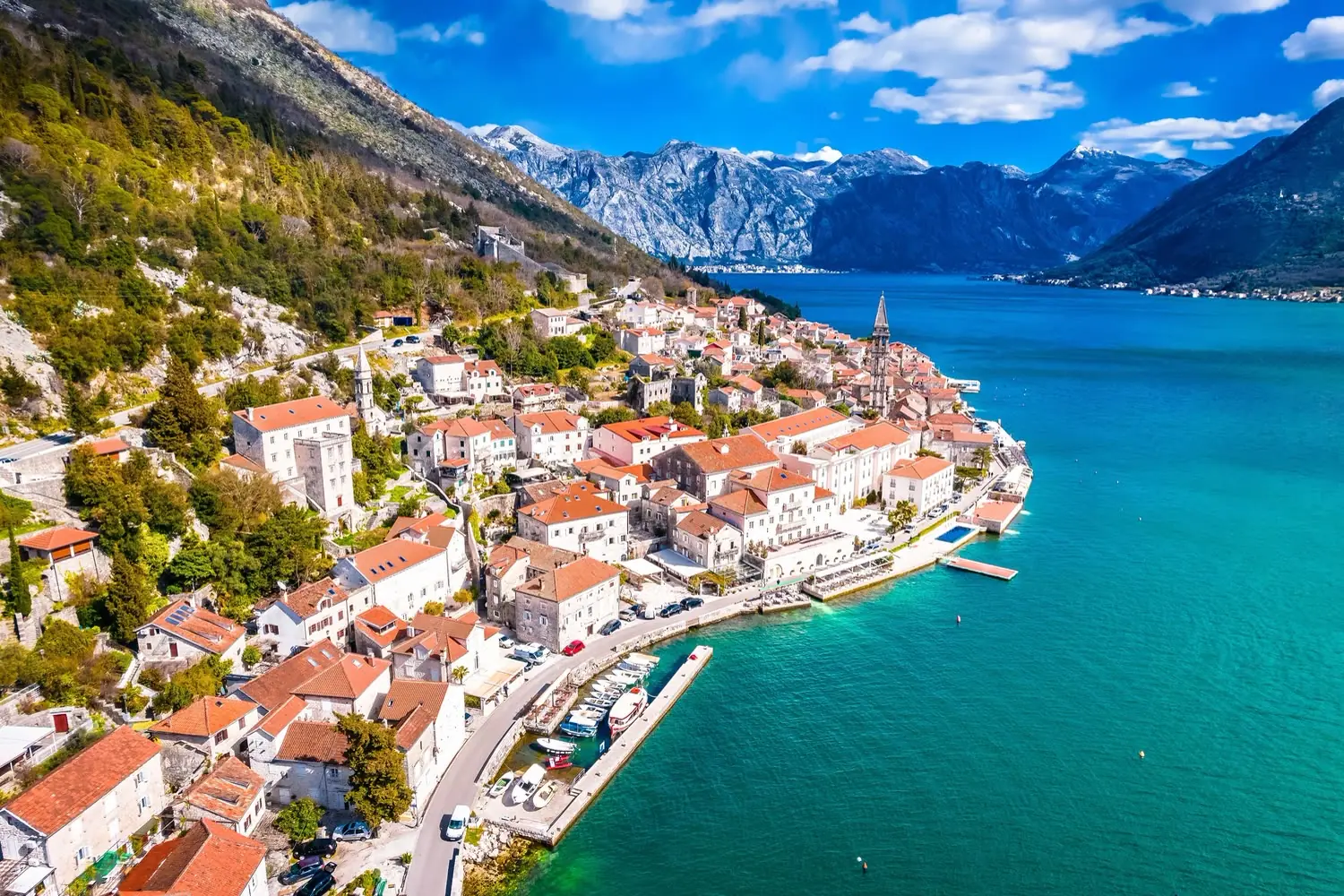
The Balkans are home to an extraordinary concentration of UNESCO World Heritage Sites, reflecting thousands of years of history and the remarkable diversity of civilizations that have shaped Southeast Europe. Roman cities, medieval monasteries, Ottoman old towns, fortified settlements, historic coastal cities and exceptional natural landscapes can often be experienced within the same journey.
At Balkan&more, however, we do not approach UNESCO sites as a checklist. A World Heritage designation tells us that a place has exceptional value, but it does not automatically explain why that place matters—or how it connects with the destination around it. For us, the story behind the site is often more important than simply standing in front of it.
UNESCO as Part of the Journey
Some of the region's most recognizable destinations are UNESCO-listed. Dubrovnik's Old City represents centuries of maritime history on the Adriatic, while the historic area of Split and Diocletian's Palace connects everyday modern life with the legacy of the Roman Empire. In Montenegro, the Natural and Culturo-Historical Region of Kotor combines an extraordinary landscape with centuries of history around the Bay of Kotor.
Further inland, UNESCO sites reveal completely different layers of the Balkans. Mostar's Old Bridge Area tells a story that goes far beyond architecture, while Serbia's medieval heritage is particularly rich, with Studenica Monastery, the Stari Ras and Sopoćani complex, and the medieval monuments of Gračanica, Dečani and the Patriarchate of Peć representing some of the most important examples of medieval religious art and architecture in the region.
In Bulgaria, Rila Monastery represents one of the country's great spiritual and cultural landmarks, while Romania's Historic Centre of Sighișoara, the villages with fortified churches of Transylvania and the painted churches of Moldavia reveal entirely different chapters of European history.
Slovenia adds exceptional natural heritage, including the Škocjan Caves, while Albania's Berat and Gjirokastër demonstrate how different cultural influences have shaped distinctive historic towns. In North Macedonia, the Natural and Cultural Heritage of the Ohrid Region is particularly remarkable because cultural and natural significance exist together in one destination.
These are only examples. The region contains many more UNESCO-listed cultural and natural sites, and the purpose of a journey should never be simply to collect as many of them as possible.
UNESCO Is Also About Living Heritage
When travelers hear UNESCO, they often think first of historic monuments and protected landscapes. But UNESCO also recognizes intangible cultural heritage: traditions, knowledge, skills and social practices that remain alive within local communities.
In Serbia, this living heritage includes kolo, the traditional folk dance, and the social practices and knowledge related to the preparation and use of šljivovica, Serbia's traditional plum spirit. Across the wider Balkans, traditional music and dance, craftsmanship, food preparation, celebrations and agricultural traditions continue to form an important part of regional identity.
These are not simply museum exhibits or performances created for visitors. Many remain part of everyday life, passed from one generation to another and preserved by the communities themselves.
This dimension of heritage is particularly close to the Balkan&more Experience More concept. A traveler may visit an important medieval monastery in the morning, but later meet a local producer, learn how traditional šljivovica is made, taste regional food or experience music and dance that remain part of local life.
For us, these encounters create the connection between the historical heritage travelers see and the culture that continues to surround it today.
UNESCO may recognize the heritage. Local people keep it alive.
The Story Matters More Than the Label
For us, visiting a UNESCO World Heritage Site should rarely be an isolated experience. A monastery becomes more meaningful when its religious and historical context is explained by the right local expert. A medieval town becomes more interesting when there is time to walk beyond its main square. A historic city becomes more memorable when architecture, food, people and contemporary life are connected into one story.
This is where our Experience More philosophy becomes particularly relevant. Visiting Mostar is not only about photographing the Old Bridge; the surrounding neighborhoods, local food, coffee culture and conversations with people help explain the city. Exploring Transylvania is not simply about seeing a fortified church; villages, landscapes and local communities provide the context that makes the heritage meaningful.
The same principle applies throughout the Balkans: the UNESCO designation may bring us to a place, but the experience around it is what helps us understand it.
Choosing the Right UNESCO Sites
A multi-country journey through the Balkans can easily include numerous UNESCO sites, but including as many as possible is not necessarily the best approach. Some fit naturally into an itinerary, while others require significant detours or deserve considerably more time than a schedule allows.
At Balkan&more, we prefer to select sites according to the logic and interests of each journey. Travelers particularly interested in history, architecture, religion or archaeology may build a significant part of their itinerary around cultural heritage. Others may visit only a few carefully selected UNESCO sites while dedicating more time to gastronomy, nature, local communities or contemporary culture.
As with the Balkans themselves, it is not about collecting places—it is about understanding them.
Keep reading
 Practical information
What is the Balkans?
More Than a Destination. A Region Best Experienced.
Read more When to go
Best Time to Visit the Balkans
Choosing the Right Season for Your Journey
Read more Stories
Balkan Roots
Nestled in southeastern Europe, the Balkans is a region where history, culture, and nature intertwine to…
Read more